Recycling Brussels
Because of its frenzied cycles of demolition and rebuilding, Brussels has been at the forefront of reimagining the role of the architect – from pure designer to master of salvage. It’s one hopeful outcome in a city where every site is a ghost story
Before publishing her first novel, Jane Eyre (1847), Charlotte Brontë encountered the setting for what would become her last book while working as a teacher in Brussels. The Belgian capital city – more specifically, the boarding school Pensionnat de Demoiselles Héger-Parent where Brontë taught – served as the inspiration for Villette (1853), which follows its heroine as she travels across the Channel from the UK to the novel’s fictional namesake city. Here, much like the author, the protagonist finds work in a boarding school. It is within the footprint of the school that Brontë, champion of the gothic, addresses the palimpsest of buildings that haunt the place. Her heroine likes to spend evenings wandering a large old garden that was once a convent. There, she encounters a ‘site which, rousing fear and inflicting horror, had left to the place the inheritance of a ghost story’:
‘The ghost must have been built out some ages ago, for there were houses all round now; but certain convent-relics, in the shape of old and huge fruit-trees, yet consecrated the spot; and at the foot of one … you saw, in scraping away the mossy earth between the half-bared roots, a glimpse of slab, smooth, hard, and black.’ 1 Charlotte Brontë, Villette (London: Everyman’s Library, 1992), 135–36.
Brontë’s novel was based on real people and places. 2 On all things Brontë and Brussels, see: Helen MacEwan, Through Belgian Eyes: Charlotte Brontë’s Troubled Brussels Legacy (Portland: Sussex Academic Press, 2017). In the ‘smooth, hard, and black’, she locates the genius loci, not only of her book but of a long-held attitude towards building in Brussels. And yet, the spectre did not stop at Villette. In 1928 the real-life pensionnat where Brontë worked was demolished and replaced by one of the major institutions of the city, Victor Horta’s Palais des Beaux-Arts (1928), which is now commonly referred to as Bozar. Since 1979, a commemorative plaque has hung on a side facade of the building, indicating the presence of Brontë as well as the demolition and construction frenzy – the ‘Brusselization’, as planners have termed it – that has characterised the city for decades. 3 Katarzyna M. Romańczyk, ‘Transforming Brussels into an International City: Reflections on “Brusselization”’, Cities 29, no. 2 (2012), 126–32. In a sense, it’s something of a miracle that Horta’s Palais is still around. His Maison du Peuple from 1899, located a few blocks away, was demolished in 1965, in favour of a 26-storey office building. 4 For this and for other stories about Belgian architecture, see: Christophe Van Gerrewey, Something Completely Different: Architecture in Belgium (Cambridge, MA: The MIT Press, 2024).
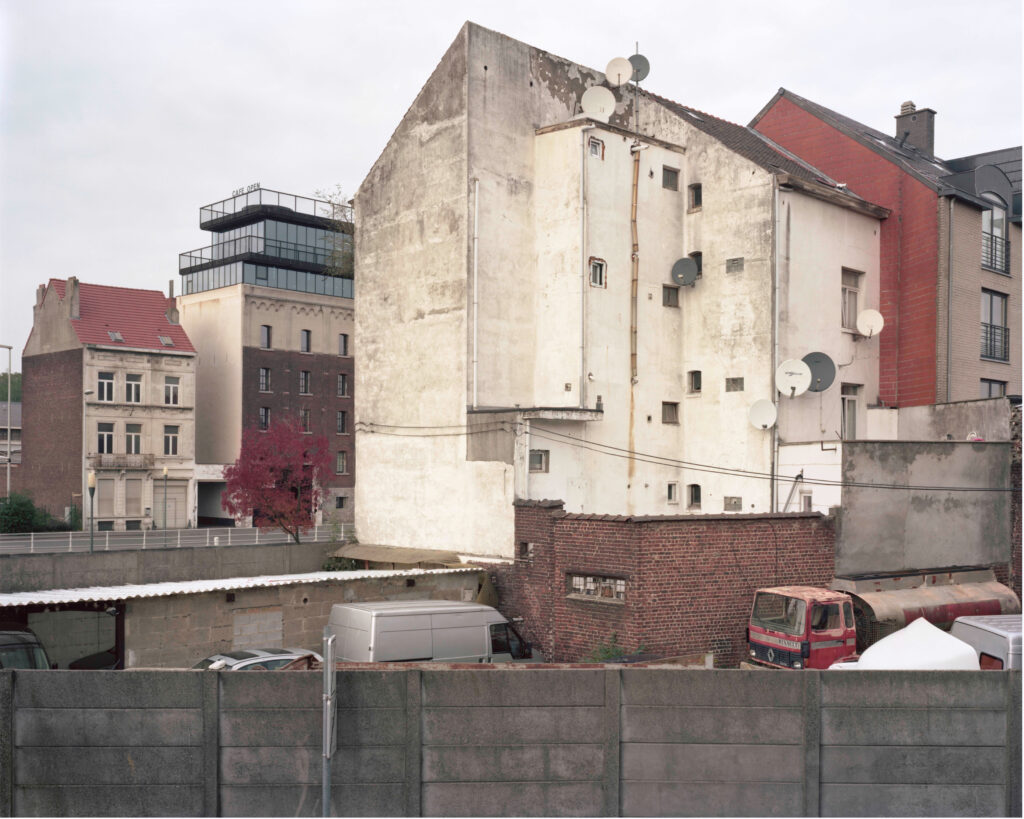
In Brussels, beneath most buildings lie the remains of others from barely half a century earlier – every site is a ghost story. This is perhaps because, compared with other European cities, Brussels has never cared much about its architecture. In turn, the inhabitants of Belgium, split in two regions, never cared much about the city. Such reciprocating indifference has made it difficult for Flemish or Walloon politicians to see the capital as anything more than a kind of colony – one in which the national construction industry can flourish. For this is, certainly, what Brussels has in abundance: partly neglected buildings that, in their current form, can no longer function. In the eyes of developers, these innumerable vacant office buildings are far too large and imposing and no longer convey the values that companies and contractors want to see represented.
This obsession with the new continues today, where the same site bears witness to multiple incarnations. For instance, immediately next to the Palais des Beaux-Arts, a classicist row of manor houses was replaced in 1971 by an enormous bank building whose combination of brutalism and late modernism had grown tired by the early 2000s. Once again, the city granted a demolition permit. The replacement, designed by Baumschlager Eberle and completed in 2021, is even more colossal than the previous building. From certain angles, it appears like a stranded whale – recumbent, silvery-ribbed – as if having swallowed, Jonah-like, the previous tenant, while at the same time awaiting its own inevitable consumption.
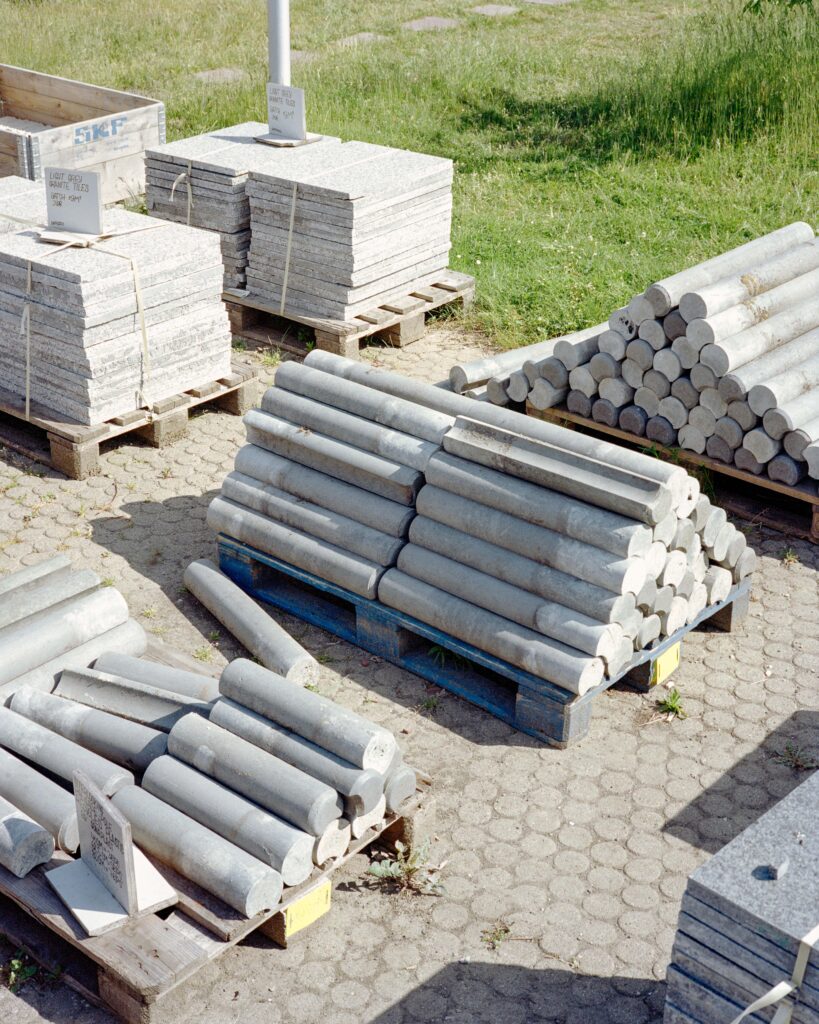
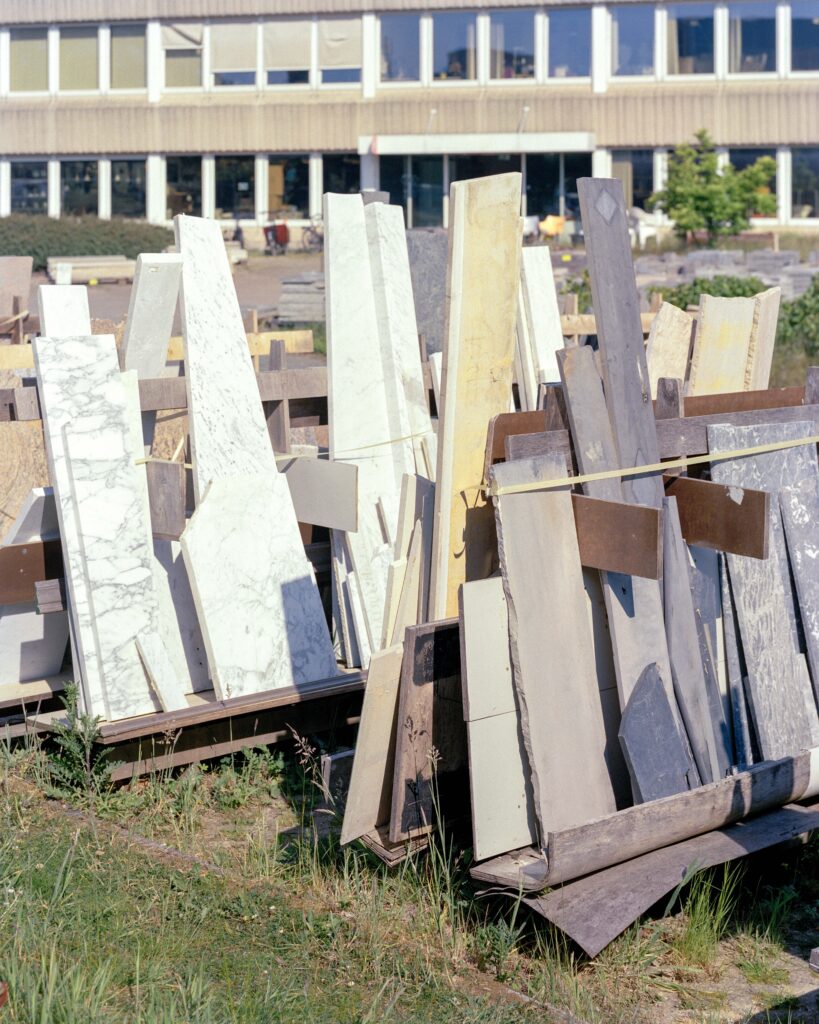
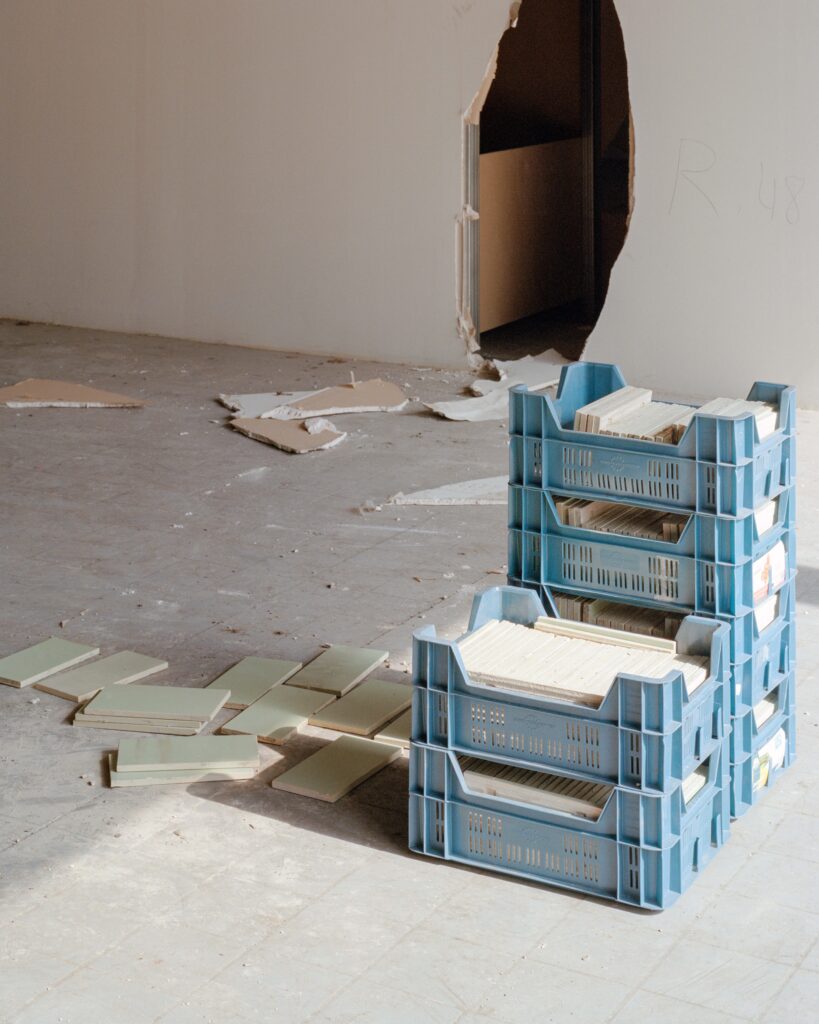
It is remarkable that against this backdrop, over the past twenty years – and especially in the last decade – a new generation of architects, politicians and policymakers seeking to stop the age-old cycle of demolition and construction has managed to cultivate an alternative attitude. The origins of this shift can be traced to two practices – Rotor and BC – both of which have helped slowly evolve the culture of building in the city, along with the role of the architect. Rotor an architecture and design collective, set up in 2005, has pioneered the design and reuse of existing building parts, transforming the image of architectural salvage from that of a graveyard of obsolete parts to a vast inventory of possibilities. 5 For an overview: Michaël Ghyoot, André Warnier, Lionel Billiet and Lionel Devlieger, (eds.), Déconstruction et réemploi: Comment faire circuler les eléments de construction (Lausanne: PPUR, 2018). In 2015, it was the collective’s cooperative arm, RotorDC, that salvaged large parts of the interior of the bank building next to the Palais des Beaux-Arts, recovering 230 tonnes of elements – ceilings, wall covering, floors, doors and furniture – that were incorporated either into the belly of Baumschlager Eberle’s whale, or used elsewhere.
Since their founding, Rotor has helped to lead a generation of architects who refuse to simply accept the role and complicity of the construction industry in climate disruption. While some practices have sought less wasteful heating and cooling techniques or tried to integrate plants and trees in buildings and environments, the ecological shift advocated by Rotor is first and foremost a material turn, and one that has ultimately reimagined how architects operate. Instead of solely designing and drawing, it is now also a necessity of the job to consciously investigate which materials are used when designs are built. Architects have always done this, of course, but what both Rotor and RotorDC expressly ask is that they automatically consider the reuse of old building materials, instead of simply sourcing new tiles, doors, windows and bricks.
Repurposing building materials is, however, easier said than done. Disassembling and sorting elements without causing damage takes time and requires a new kind of expertise. At the same time, a logistics chain that connects supply and demand must be established. Furthermore, architectural elements cannot be designed according to preferences because their forms must already exist in an obsolete building. On top of these complications, until recently, the regulations for public procurement, dating from the twentieth century, prohibited material reuse due to the belief that only new materials – and by extension new buildings – were good enough.
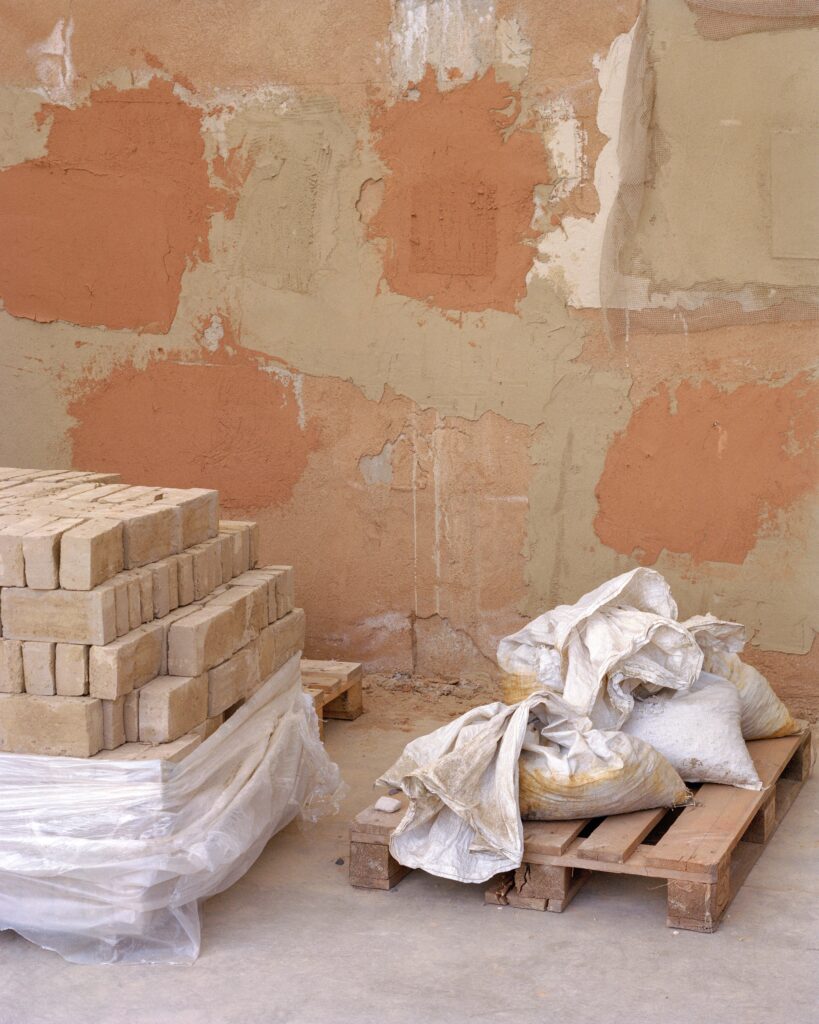
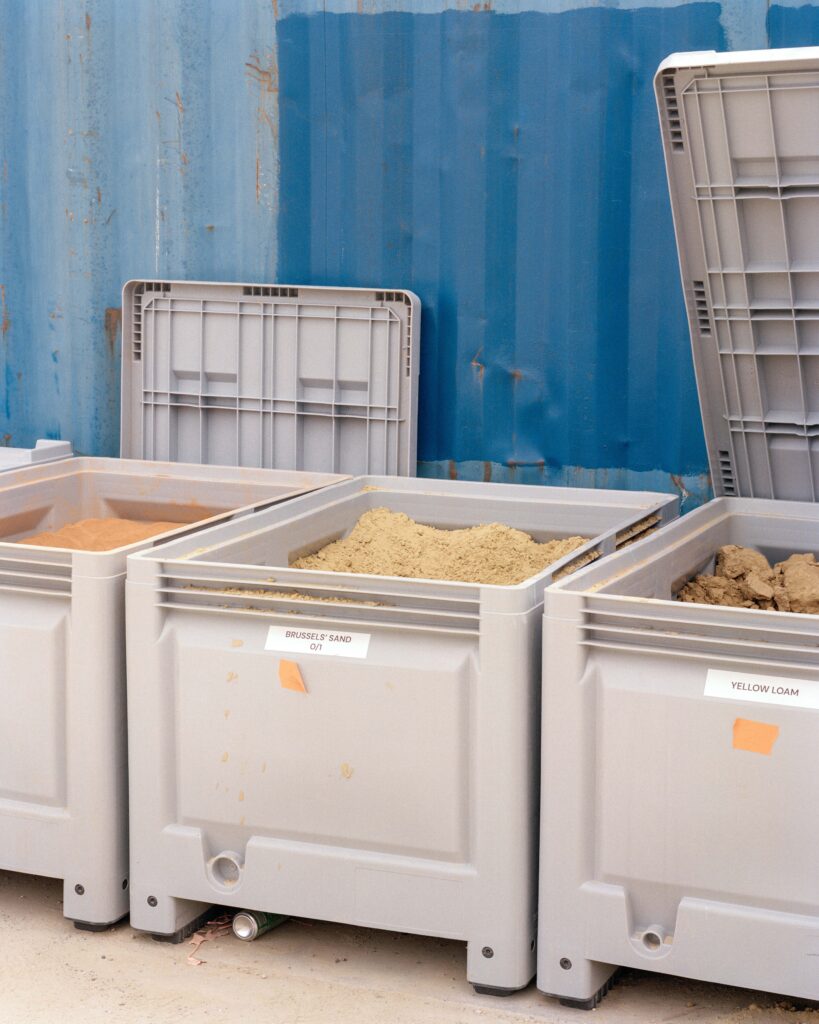
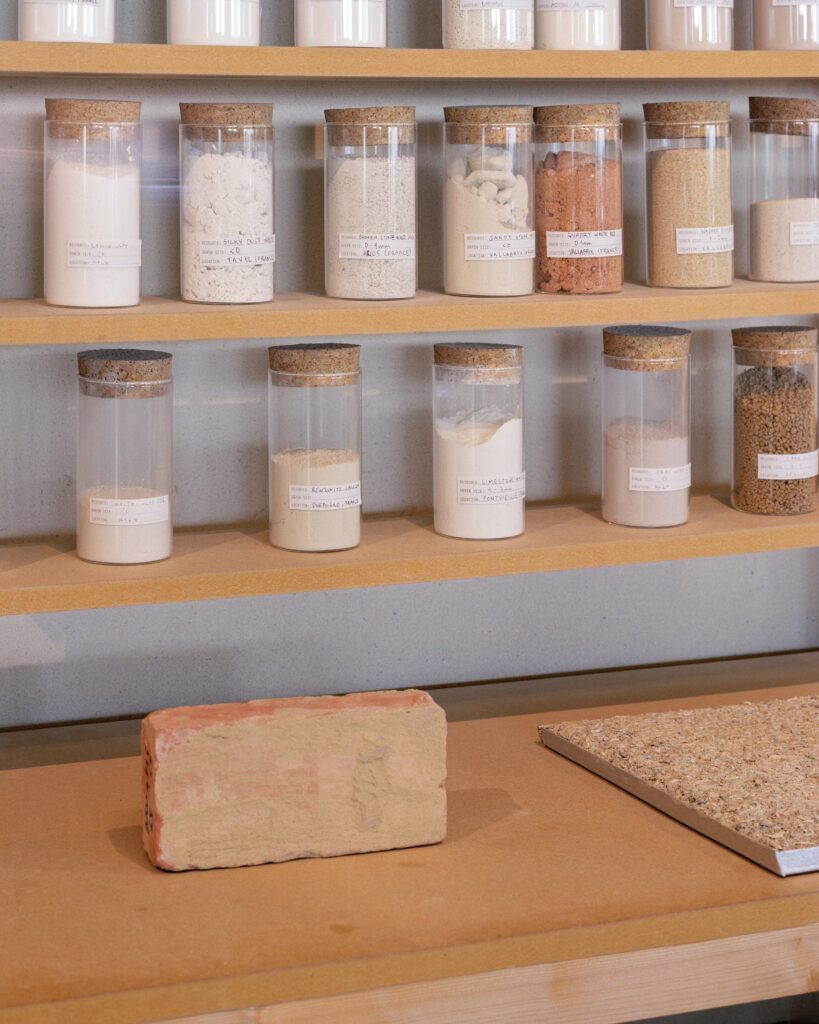
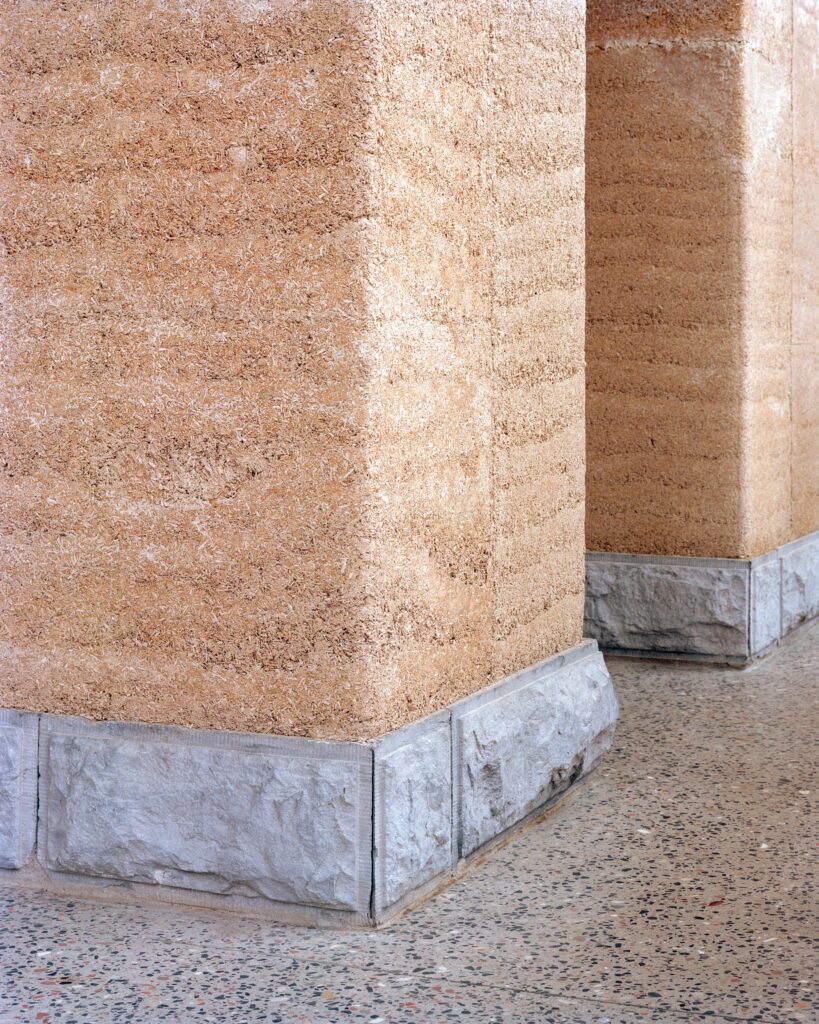
As a contemporary of Rotor, in 2006 the hybrid practice BC (Brussels Cooperation, combining architecture, research and materials), went a step beyond the reclamation of discarded parts to develop those objects into products of even higher quality. For example, BC Materials makes dry-cured bricks out of bits of broken concrete and glass, or by constructing walls with only two materials (such as structural earth blocks and a hemp-lime insulation on a wooden framework). They have created new buildings or extensions with circular, locally sourced, renewable, nonindustrial and non-polluting materials. 6 For an overview: Pauline Lefebvre and BC Architects & Studies, The Act of Building (Antwerp: Flanders Architecture Institute, 2018).
If the ground for change was prepared by these two practices, it was Kristiaan Borret, working as Bouwmeester Maître Architecte of the Brussels–Capital Region from 2015 to 2025, who reshaped the policy and building ideology of the city, and made the avant-garde mainstream. 7 For an overview of his tenure, see: Jan Denoo, Hedwig van der Linden (eds.), Soft Power: 10 Years of Bouwmeester Maître Architecte in Brussels (Cologne: Verlag der Buchhandlung Walther Konig, 2024). During the first half of his tenure, Borret sought to break old industry habits, first by making the commissioning of architects more transparent and negotiable, and by organising public competitions. From 2020 onwards, he and his team focused on convincing clients, both public and private, not to replace existing buildings with new ones – in particular, the vast office stock of Brussels from the 1960s to the 1990s. Their vision for the fabric of the city is perhaps most clearly articulated in a single statement by the Regional Urban Planning Regulations of the Brussels–Capital Region: ‘Every existing building will be conserved and, if necessary, renovated.’ 8 ‘The Regional Urban Planning Regulation (RUPR) Adopted in the Second Reading’, Brussels Regional Public Service Urbanism and Heritage, 18 April 2024, Source. Updated in 2024 and waiting to be approved by the incoming government.
Many projects from the past decade illustrate this ambition by renewing and updating a city without demolishing or creating something brand new. Yet these projects also show that there are no miracle solutions, and that other problems and side effects arise. Emblematic in this regard is the Brussels World Trade Center (WTC), completed between 1972 and 1976 – two office towers, each 102m in height, equally embedded into an impenetrable plinth. A commission to replace the WTC was initially awarded to Jaspers-Eyers, a maligned firm that has made itself indispensable in large construction projects in Brussels since the 1980s. However, it was the Brussels Bouwmeester who convinced the real estate company that owns the WTC to organise a competition in 2017, after which Jaspers-Eyers was asked to collaborate with Brussels-based 51N4E and French practice l’AUC on a design not for a new building but a transformation of the existing one. This ‘revamped’ WTC opened its doors in 2024. Described as ‘the largest circular office building in our country’, it became the subject of a book, How Not to Demolish a Building. 9 Wouter Polspoel, ‘The Largest Circular Office Building in Our Country (51N4E, Jaspers-Eyers Architects and l’AUC) Officially Opened’, Circubuild, 7 February 2024, Source; 51N4E, l’AUC, Jasper Eyers architects and Befimmo, How to not Demolish a Building (Berlin: Ruby Press, 2022). Whether the title is justified is up for discussion: of the original building, only the underground parking floors and the concrete circulation cores remain, even if a majority of the removed material was later reused on site or put up for sale by RotorDC.
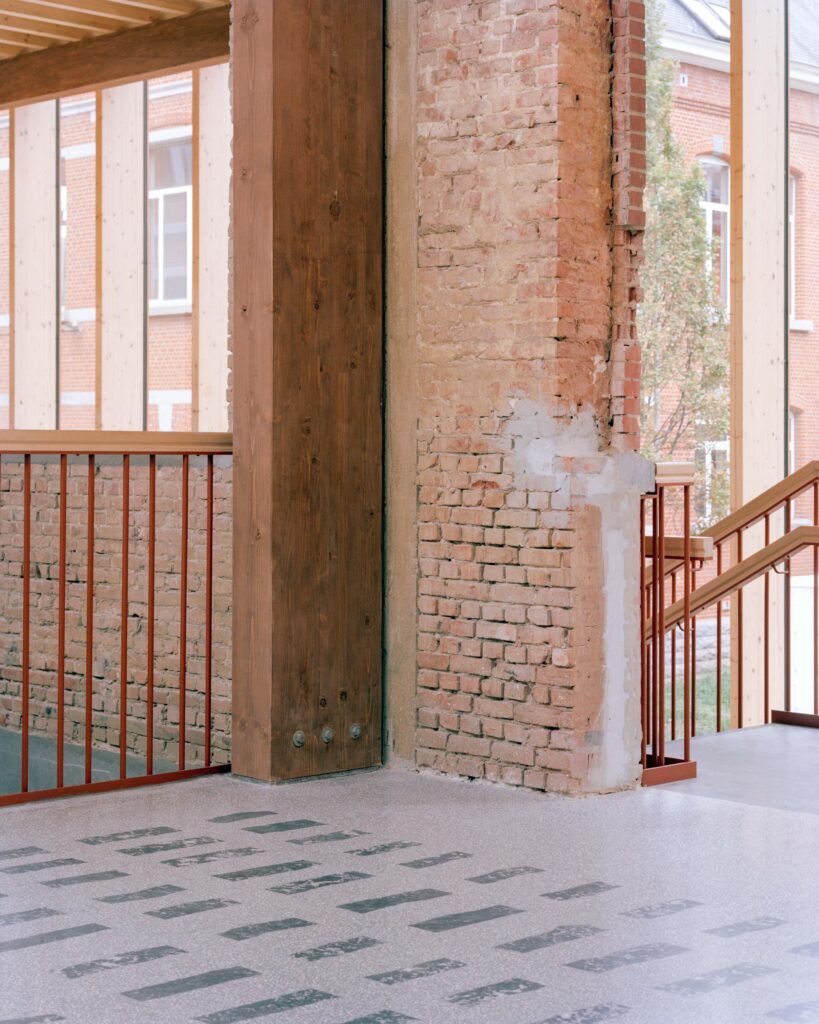
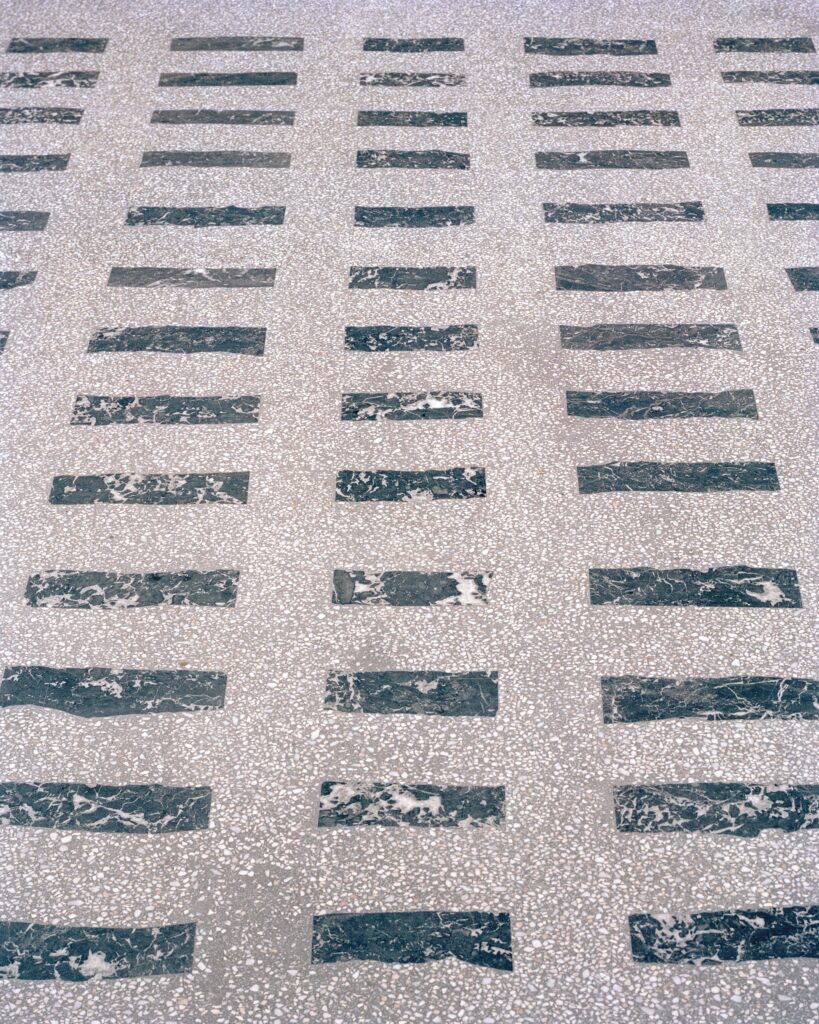
A smaller, slower but more thorough reuse project is Usquare, also from 2024. It deals with the reorganisation of a former Royal Gendarmerie School – an impressive, fully walled complex of four hectares, with neo-Renaissance facades, as well as additions from the 1950s and 1970s. The site has been transformed by the Brussels-Capital Region, in cooperation with two universities, into a new urban block that includes family homes, social housing, student flats, an events hall and a food market, as well as research spaces, fabrication labs, offices and short-term residences for academics. A team composed of the offices of EVR, BC Architects & Studies and Vincent Callebaut Architecture tackled the renovation and redevelopment of several connected buildings at the front of the site, with the addition of new volumes that extend the historical complex. In this case too, RotorDC stepped in to minimise the flow of incoming and outgoing materials. An intense process of dismantling turned the site into a kind of local mine for reuse, but also for recycling. Almost 1,000m2 of a new granite floor was created by BC Materials by grinding down 150 windowsills; 210 double glazed windows were reused; a total of 150m2 of ceramics; 150 radiators; 30 urinals; 20 sinks; 150 door fittings; and two fire ladders were removed from the old buildings, cleaned and put back into use. One type of brick, however, had to be rejected, because it was not considered frost-resistant according to regulations, even though the material had been functioning properly for nearly a century. Some new, bio-based materials were also necessary, including clay plasters – made with soil not from the site itself but from another project nearby – and walls made out of hempcrete. The plaster, with fractions of hemp and cork, was specifically developed by BC to meet acoustic requirements in the offices.
A more high-end example is another office building reaching almost 50m in height, constructed in 1970 for the insurance company Royale Belge. The competition for this adaptive reuse was won in 2019 by London-based Caruso St John with Belgian practices Bovenbouw and DDS+. Their starting point was the premise of altering the building as little as possible. While the materials that define the architecture remain – concrete, Corten steel, sun-reflecting copper and whiskey-coloured glass – there is one significant spatial intervention: a circular cutout, 21m in diameter and three storeys high, which connects the vertical spaces of the building via a sweeping spiral staircase and draws daylight deep into the building’s interior spaces.
Despite efforts by architects and policymakers to embrace ethical building approaches, some of the programming of these examples suggests that there is more work to be done. As Eleanor Beaumont has observed, in the ‘new’ Royale Belge that reopened in 2023, ‘the current inhabitants – primarily a luxury hotel with attached spa and restaurants, all lavishly and fashionably decorated by interior designer Lionel Jadot – are not principally sustainable programmes’. 10 Eleanor Beaumont, ‘La Royale Belge’, A+U 1 (2024), 168. The remark applies equally to the reconversion of the WTC, where, in May 2025, the first Belgian location of The Standard hotel opened its doors. Reuse in architecture, unfortunately, doesn’t rule out gentrification. Yet, as Beaumont posits, ‘these architectural interventions will long outlive the current tenants – and will allow the building to live on in many guises’, suggesting that within Brussels’ ample supply of old, vacant buildings, there remain possibilities for reuse on a more social scale. The Dutch office Atelier Kempe Thill, for example, is preparing the next phase of the Usquare development. Brick barracks will be transformed, by means of new steel and timber terraces, into a social housing estate.
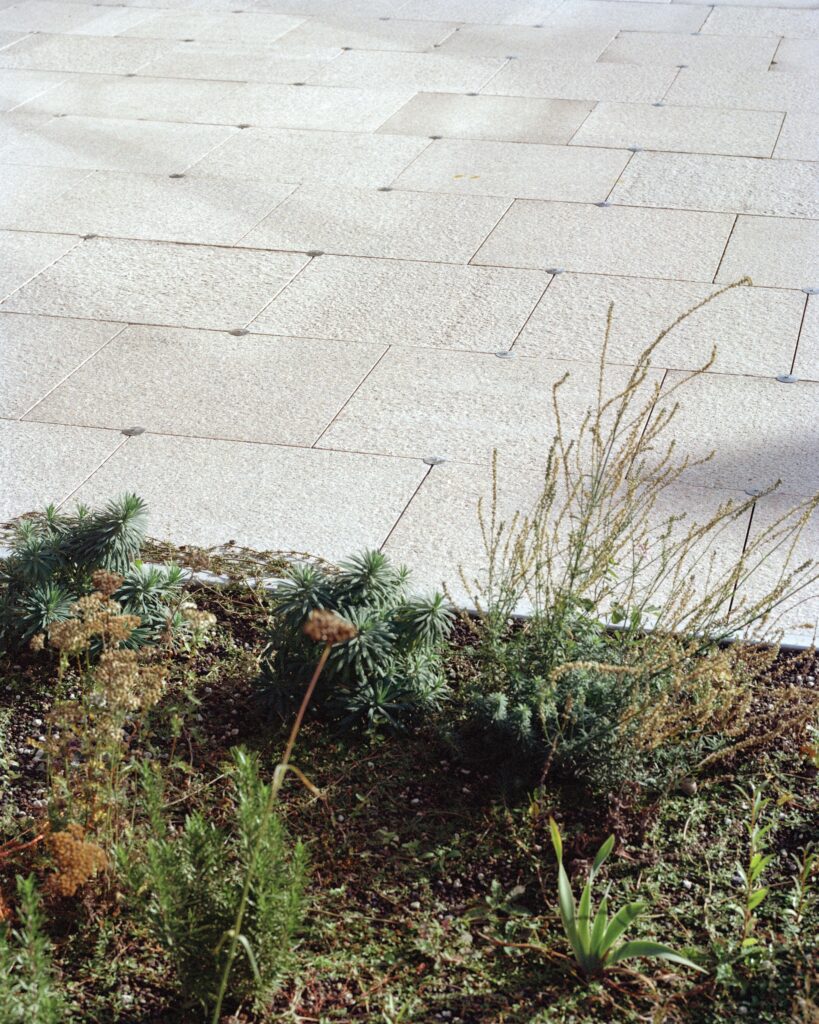
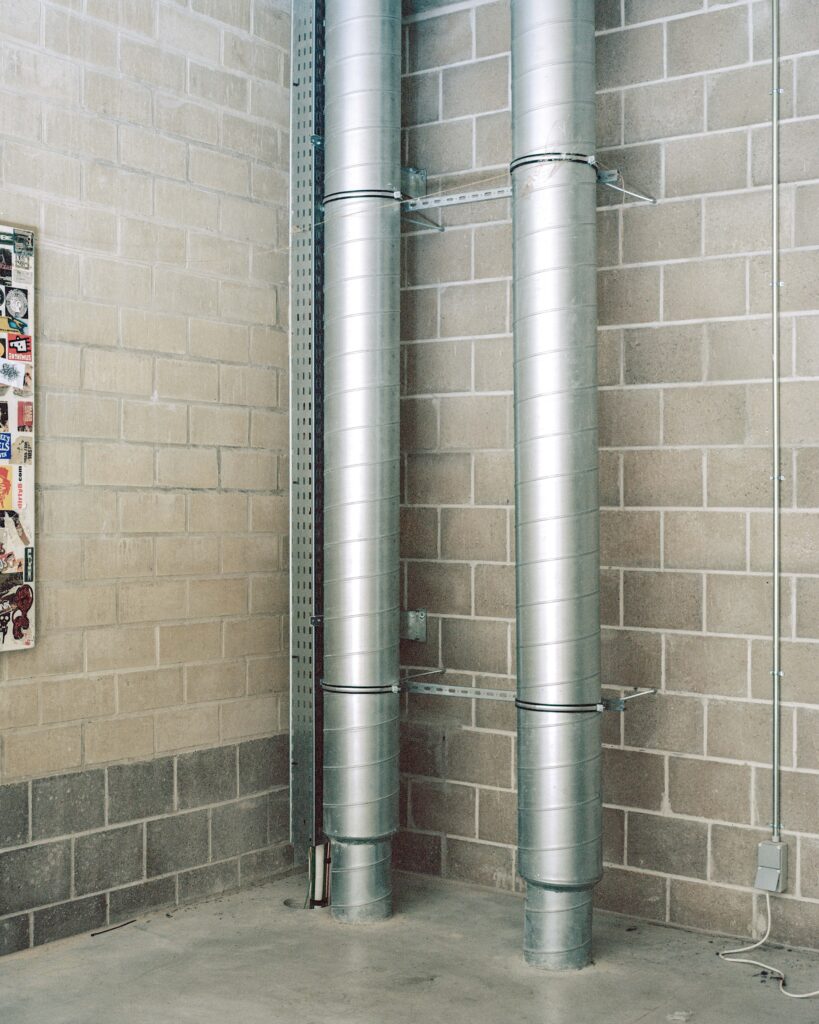
As paradoxical as it may seem, the culture of reuse is now so prevalent that it has become a driver in new building projects. Both RotorDC and BC Materials were involved in the construction of the new space for Magasin 4, an underground music venue designed by Brussels-based Central. Much of the structure is composed of Léém Compressed Earth Blocks, developed by BC Materials and chosen for their acoustic performance. For the rooftop terrace, Rotor DC provided 200m2 of reclaimed flamed granite slabs, sourced from the facade of a 1980s office building. Installed on pedestals, and without mortar, they allow for future disassembly and reuse. The design of the building is also future proof – according to the architects, the oversized load-bearing structure can support additional floors.
Brussels continues to change, but not like before. Demolition and construction no longer brutally visualise these changes, as in the days of Villette, when entire city districts were wiped out and replaced in just a few years. Yet whether the building industry – and its negative impact on the climate – has fundamentally altered remains uncertain. The remuneration of architects continues to be calculated based on traditional design activities rather than taking into consideration the more recent work of their practices as coordinators of reuse supply chains and material research and development. There is rarely any additional budget for preserving or creating alternative materials, or for the labour-intensive renovation of existing spaces. At the same time, as Michaël Ghyoot and Tom Schoonjans from Rotor explain, ‘The Brussels real-estate sector is well practised in seeking compensation for the loss of value that would otherwise be extracted through new construction.’ 11 Michaël Ghyoot and Tom Schoonjans, ‘Break the Cycle: The Limits of Circular Construction’, The Architectural Review, no. 1521 (May 2025), 9. Buildings may no longer be demolished, but the cycles of their refurbishment can be shortened as entrepreneurs more frequently update interiors to suit trends. A moratorium on new construction can still lead to the seemingly endless (and wasteful) reorganisation of office interiors. And while the Regional Urban Planning Regulations of Brussels enforces the maintenance of all existing buildings, height restrictions have been relaxed to allow for large extensions and densification. Moreover, the loss of income in the real estate market due to decreased construction can be recovered by increases in rent. ‘Material and technological “fixes” proposed in “circular” thinking’, Ghyoot and Schoonjans conclude, ‘run the risk of serving as a useful distraction of fundamentally unequal socio-economic relations.’ 12 Ibid., 11. In the history of architecture, the tale is all too familiar, as the avant-garde is co-opted by capitalism. The true genius loci of Brussels remains economic in nature.